
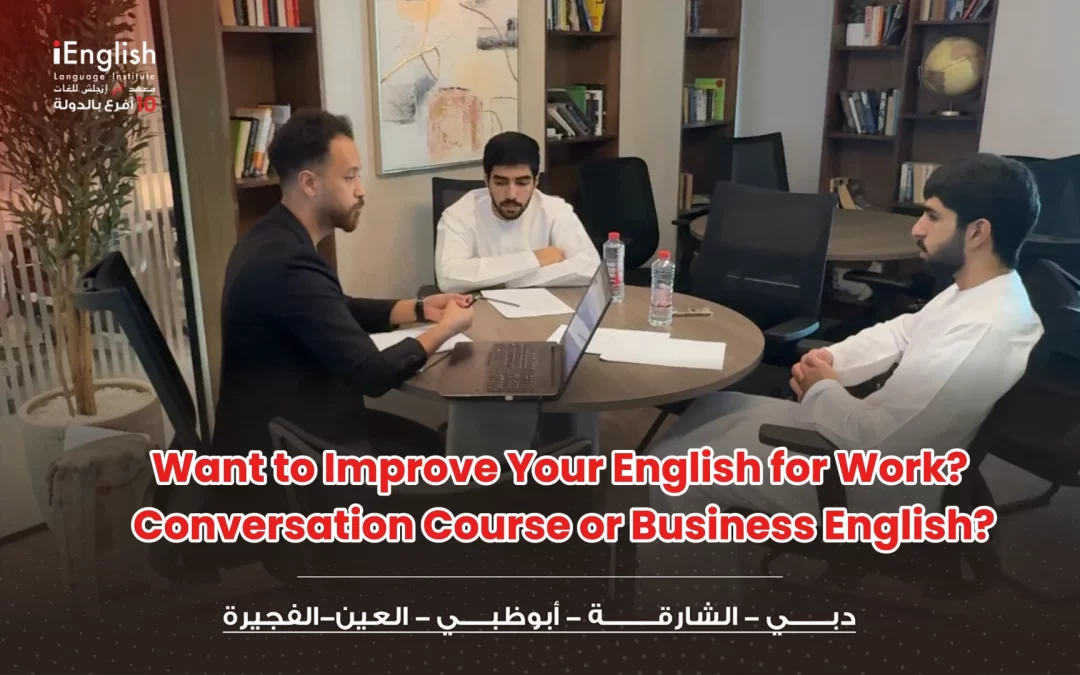
Want to Improve Your English for Work? Conversation Course or Business English?
You understand English, but when a meeting starts or a client asks an unexpected question, you hesitate. So should you choose a Conversation Course or Business English?
If your goal is to improve your English for work, the right choice depends on the problem you actually need to solve: general speaking confidence or professional workplace communication.
Not sure which course fits your job? Check your level first.
Start with a level assessment and choose a course based on your real communication needs.
Conversation Course vs Business English: What Is the Difference?
| Area | Conversation Course | Business English |
|---|---|---|
| Main Goal | Speak more naturally and confidently | Communicate effectively at work |
| Speaking | Everyday fluency and confidence | Meetings, clients, presentations, negotiations |
| Vocabulary | General daily situations | Professional and workplace situations |
| Writing | Usually not the main focus | Emails, reports, proposals, and formal communication |
Choose a Conversation Course If You Understand English but Hesitate
You Translate Before Speaking
You know the answer but build it in your first language before saying it in English.
You Stop After a Few Sentences
You can start the conversation but struggle to continue naturally.
You Need More Speaking Confidence
You want to communicate more comfortably with colleagues and people around you.
Your English Foundation Is Already Reasonable
You understand grammar and vocabulary, but using them quickly is the main challenge.
If this sounds like you, explore the English Conversation Courses at iEnglish.
Choose Business English If Your Problem Appears at Work
Business English becomes more useful when your English changes the way you perform professionally.
You may need it if you struggle to:
- Express your opinion during meetings.
- Explain a project or problem clearly.
- Speak confidently with clients.
- Give presentations or updates.
- Negotiate prices or conditions.
- Write professional emails.
In that case, a Business English Course may be closer to your goal than general speaking practice alone.
Can You Need Both Conversation and Business English?
Yes. Many professionals have two gaps at the same time: they need more fluency and more professional vocabulary.
You may first strengthen your ability to speak without long pauses, then focus more on workplace situations. Or your programme may combine both, depending on your current level and goal.
The important point is not to choose a course because of its name. Choose it based on the situations where English is currently limiting you.
How to Choose the Right English Course for Work
At iEnglish Language Institute, the better starting point is to identify your current level and the English situations you face at work.
If your main issue is fluency, conversation practice may be the priority. If your challenge is meetings, presentations, clients, or emails, Business English may be more suitable.
Conversation or Business English? Choose the course that solves your real problem.
Check your level and find the right English path for your work goals.