
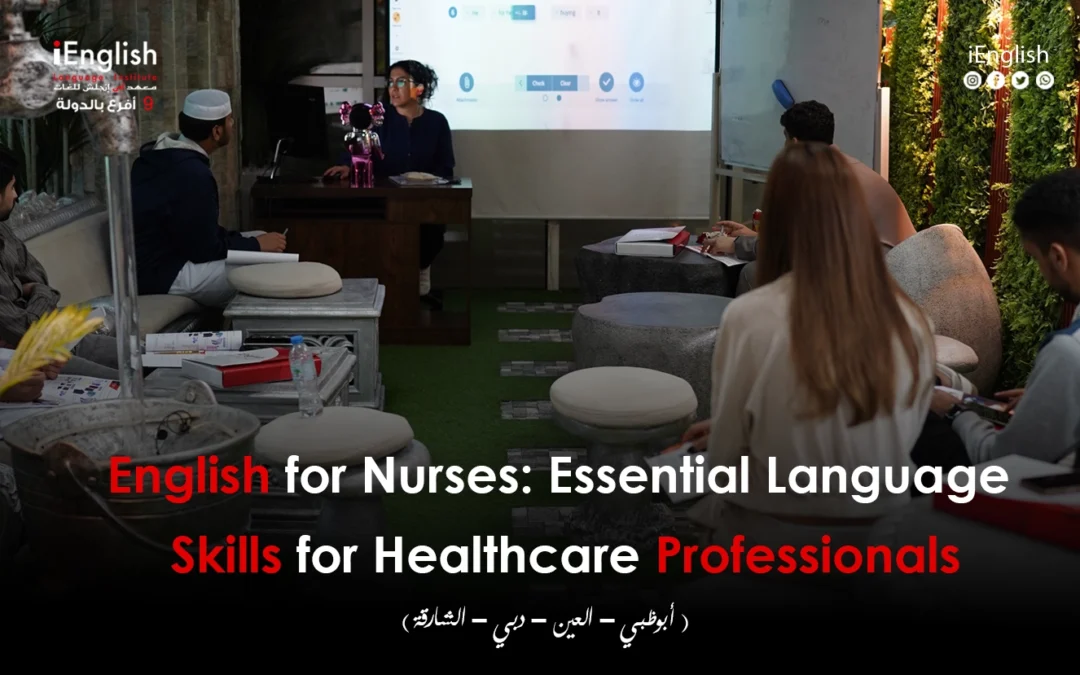
English for Nurses: Essential Language Skills for Healthcare Professionals
In today’s global healthcare environment, effective communication is critical to patient safety, quality care, and professional success. For nurses and healthcare professionals working in international or multicultural settings, English language proficiency is no longer optional — it is an essential workplace skill.
This article explores why English for Nurses is so important, the key language skills required in healthcare settings, and how professional English training can improve daily performance and career opportunities.
Why English Is Essential for Nurses and Healthcare Professionals
Healthcare environments rely heavily on clear and accurate communication. Nurses use English daily to:
- Communicate with patients from different nationalities
- Understand doctors’ instructions and medical reports
- Write nursing notes and patient documentation
- Participate in handovers and medical briefings
- Explain procedures and medications to patients
Even small misunderstandings in healthcare communication can lead to serious consequences. Strong English skills help ensure patient safety, clarity, and professionalism.
What Is English for Nurses?
English for Nurses is a specialized form of Medical English focused on real healthcare situations. It goes beyond general English and concentrates on:
- Medical vocabulary and terminology
- Patient interaction and bedside communication
- Professional documentation and reporting
- Clear and compassionate language use
This type of training prepares nurses to use English confidently in real clinical environments.
Key English Language Skills Nurses Need
1. Speaking and Patient Communication
Nurses must communicate clearly and calmly with patients. This includes:
- Asking about symptoms
- Explaining procedures
- Giving instructions and reassurance
- Responding to patient concerns
Clear spoken English improves patient trust and comfort.
2. Listening and Understanding Medical Instructions
In busy healthcare settings, nurses must accurately understand:
- Doctors’ orders
- Emergency instructions
- Shift handovers
- Team discussions
Strong listening skills help prevent errors and improve teamwork.
3. Medical Vocabulary and Terminology
Healthcare professionals need to understand and use medical terms related to:
- Symptoms and conditions
- Medications and dosages
- Equipment and procedures
- Patient care and monitoring
Learning correct medical terminology is a core part of English for Nurses training.
4. Writing and Documentation Skills
Accurate documentation is a critical nursing responsibility. Nurses must be able to:
- Write clear patient notes
- Complete reports and charts
- Record observations and incidents
- Communicate professionally through written English
Good writing skills support continuity of care and legal compliance.
English for Nurses in Multicultural Healthcare Settings
In countries like the UAE, healthcare teams and patients come from diverse cultural backgrounds. English serves as the main communication language between:
- Nurses and patients
- Nurses and doctors
- Multidisciplinary healthcare teams
Strong English skills help nurses work confidently in multicultural environments and deliver high-quality care.
Professional English Training for Nurses at iEnglish Skills Institute
Established in 2007, iEnglish Skills Institute offers professional English training programs designed specifically for healthcare professionals.
Our English for Nurses courses focus on:
- Real clinical scenarios
- Practical patient communication
- Medical terminology in context
- Clear and professional documentation
- Confidence-building speaking practice
Training is designed to be practical, relevant, and directly applicable to daily nursing duties.
Who Should Take an English for Nurses Course?
This type of training is ideal for:
- Registered nurses
- Nursing students
- Healthcare assistants
- Hospital and clinic staff
- Professionals preparing for international healthcare roles
Whether you are new to the profession or an experienced nurse, improving your English skills enhances both performance and confidence.
Career Benefits of Strong English Skills for Nurses
Nurses with strong English proficiency benefit from:
- Better communication with patients and teams
- Increased confidence at work
- Improved job performance
- Greater career mobility
- Access to international healthcare opportunities
English proficiency is a key factor in professional growth within the healthcare sector.
Conclusion
Effective communication is at the heart of quality healthcare. For nurses and healthcare professionals, mastering English is essential for patient safety, teamwork, and career development.
By enrolling in English for Nurses training, healthcare professionals gain the language skills needed to perform confidently, communicate clearly, and provide better patient care in today’s global healthcare environment.
📩 Enhance your healthcare communication skills with English for Nurses training at iEnglish Skills Institute
🌍 Website: https://ienglishinstitute.ae