
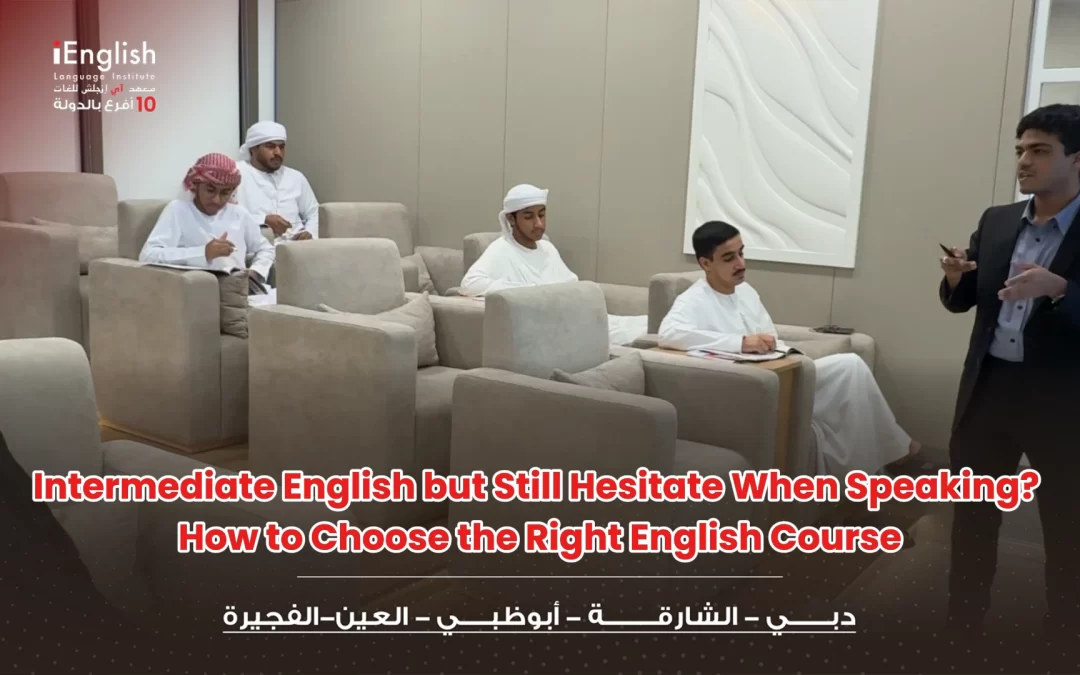
Intermediate English but Still Hesitate When Speaking? How to Choose the Right English Course
You understand English, follow most conversations, and probably know enough grammar to build correct sentences. But when it is your turn to speak, you pause, translate in your head, or keep your answer very short.
If you have intermediate English but still hesitate when speaking, the problem may not be your overall English level. You may simply need a course that gives more attention to active speaking, fluency, and real communication.
You know English. Now you need to use it faster.
Start with a level assessment and find out whether your main gap is fluency, vocabulary, confidence, or overall English.
Why Do Intermediate English Learners Still Hesitate When Speaking?
You Translate First
You build the sentence in your first language before saying it in English, which slows down your response.
Your Vocabulary Is Passive
You recognise many words while reading or listening but do not use them naturally when speaking.
You Fear Making Mistakes
You spend too much time checking grammar in your head instead of continuing the conversation.
You Do Not Speak Enough
Your English input may be strong, but your speaking practice is still too limited.
Which English Course Should an Intermediate Learner Choose?
| Your Main Problem | Course Focus to Consider |
|---|---|
| You understand English but hesitate when speaking | Conversation English |
| You struggle across speaking, grammar, reading and writing | General English |
| You speak socially but struggle at work | Business English |
| You are unsure which description fits you | Level Assessment first |
Signs You Need a Speaking-Focused English Course
- You understand more English than you can speak.
- You often know the word but cannot remember it fast enough.
- You give short answers even when you know more.
- You avoid conversations because you worry about mistakes.
- You struggle to continue speaking for more than a few sentences.
If these points sound familiar, explore English Conversation Courses and compare the course focus with your current needs.
What Should You Practise to Speak More Naturally?
Speaking improvement does not come from memorising more grammar rules alone. You need to make the English you already know easier to access during a real conversation.
Useful practice should include common questions, longer answers, role plays, opinion sharing, pronunciation, listening and response speed. You also need correction on mistakes that repeatedly affect clarity.
The goal is not to speak without mistakes. The goal is to express your idea, continue the conversation, and become more accurate over time.
What If You Need English for Work?
If hesitation mainly appears during meetings, presentations, client conversations, or professional discussions, a speaking course may not be enough by itself.
In that case, explore Business English. It focuses more on workplace situations, professional vocabulary, meetings, presentations, negotiations, and emails.
Choose the Right English Course at iEnglish
At iEnglish Language Institute, the best starting point is to identify what is actually stopping you from speaking confidently.
You may not need to restart English from a lower level. Instead, you may need a more focused path that turns your existing knowledge into active communication.
Intermediate English but still hesitate? Find the real gap first.
Check your level and choose the course that targets the skill you actually need to improve.